PROJECT
Beam
TYPE
UX/UI (Mobile)
Role
Personas, Diagrams, Interface Design
YEAR
2024
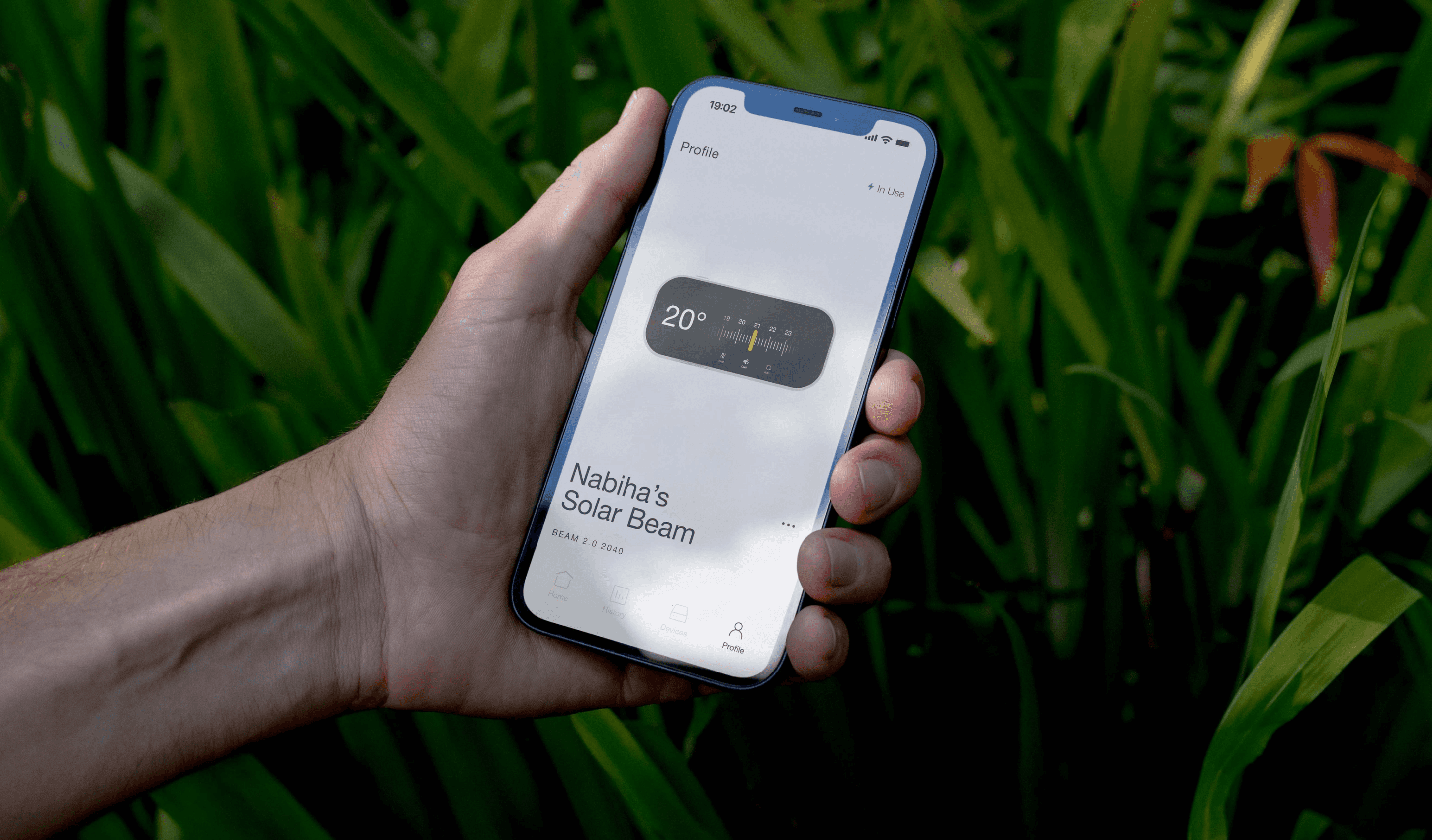
As solar panels become cheaper and more efficient, it is estimated that almost one-third of the world’s electricity will come from solar by 2040, including 10% from residential solar systems. My team members (Nabiha Tasnim and Sam Overend) and I were tasked with the brief:
PROBLEM STATEMENT
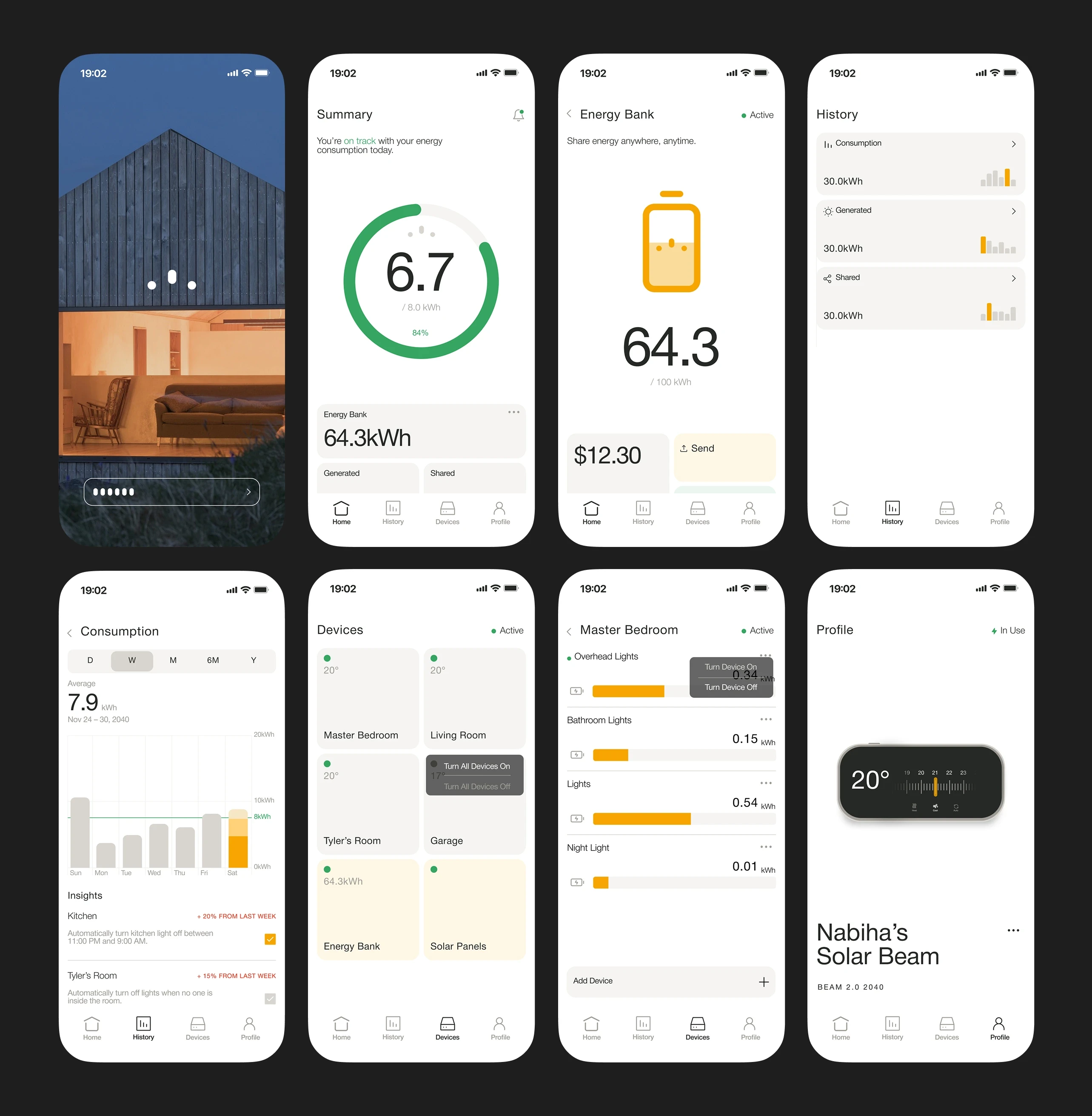
Users need a smart home energy management system that adapts solar energy consumption based on the user’s lifestyle while optimizing cost-effectiveness and energy sharing, facilitating a more sustainable and affordable lifestyle.
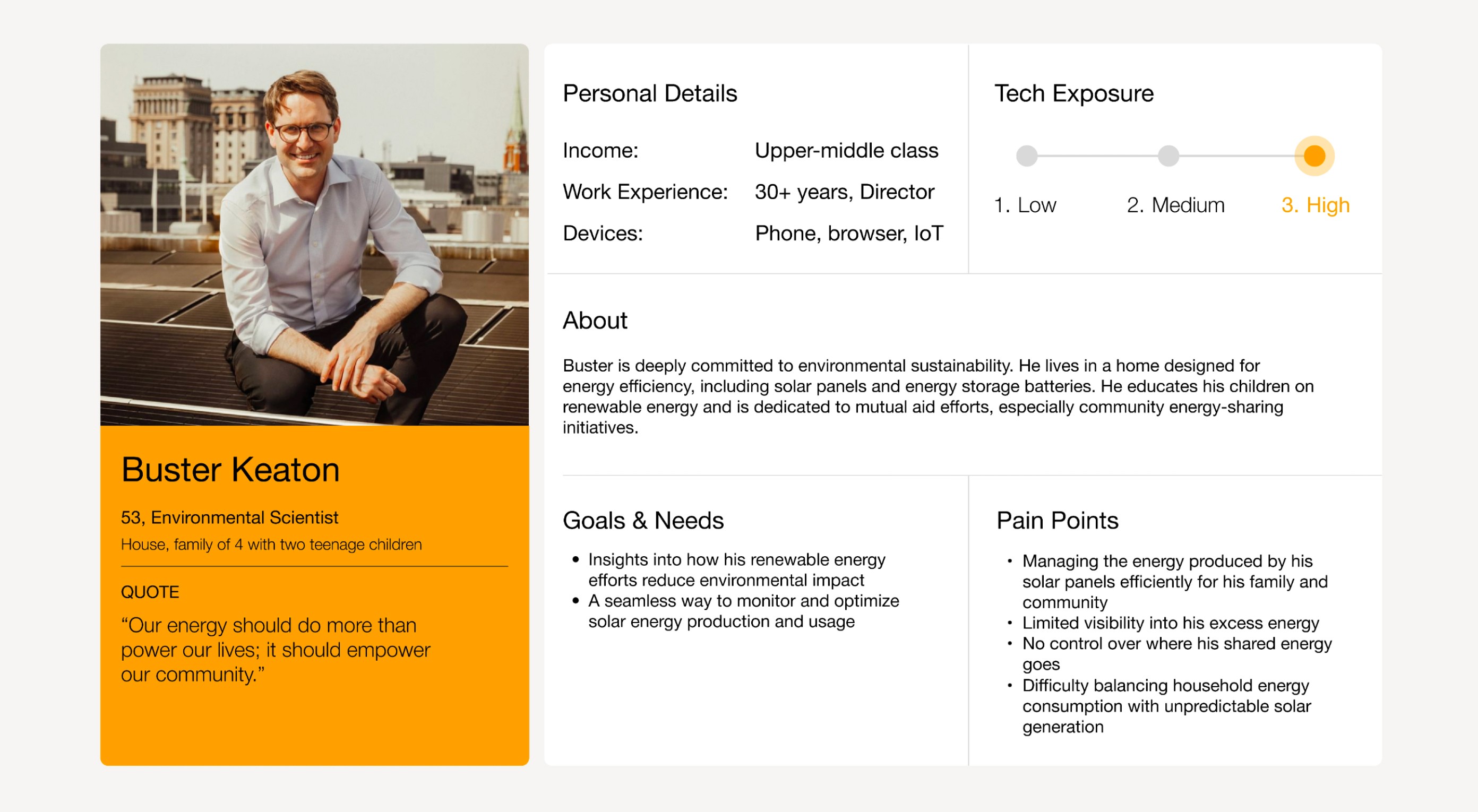
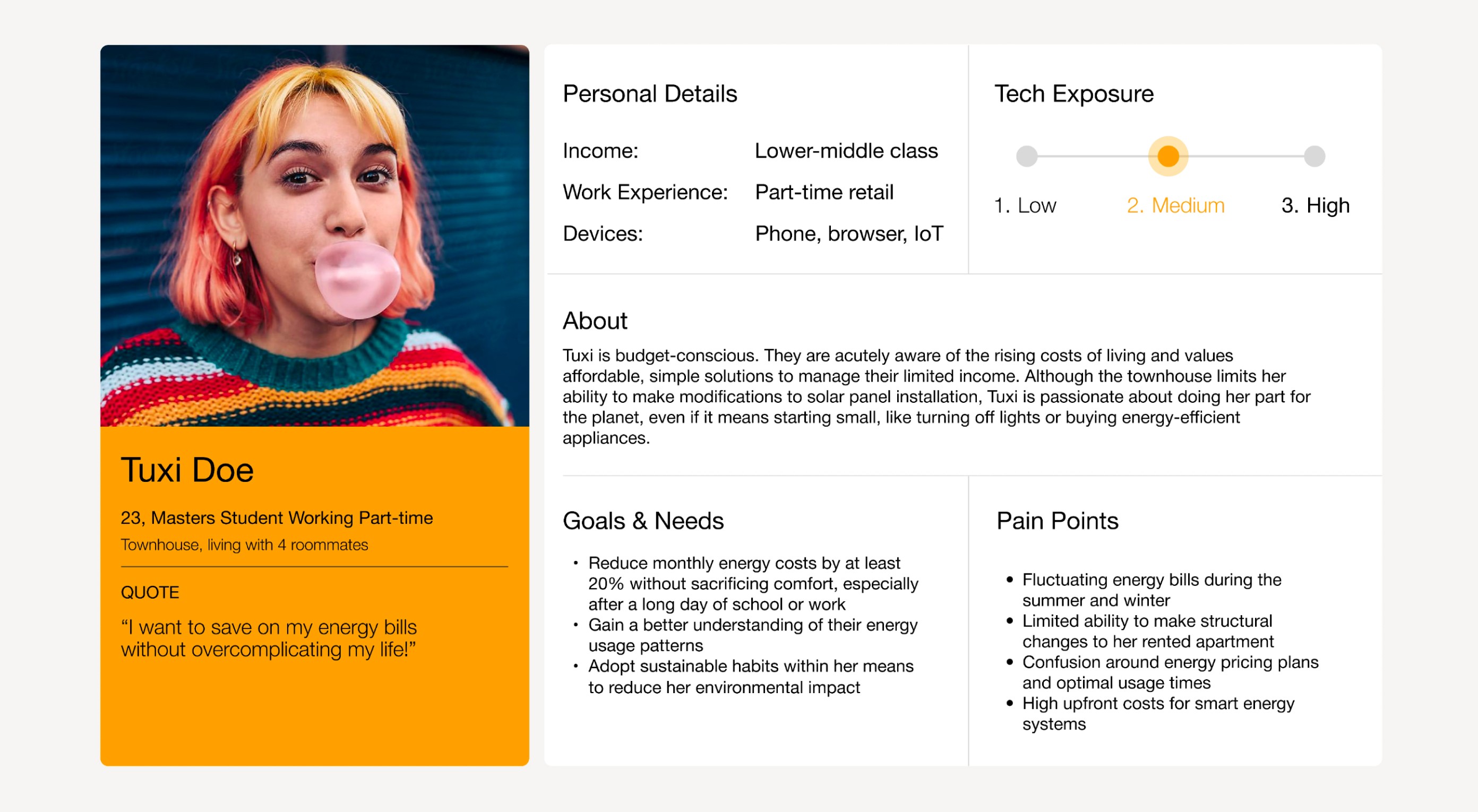
Our team created two personas to represent our target audience: Buster (primary) and Tuxi (secondary).
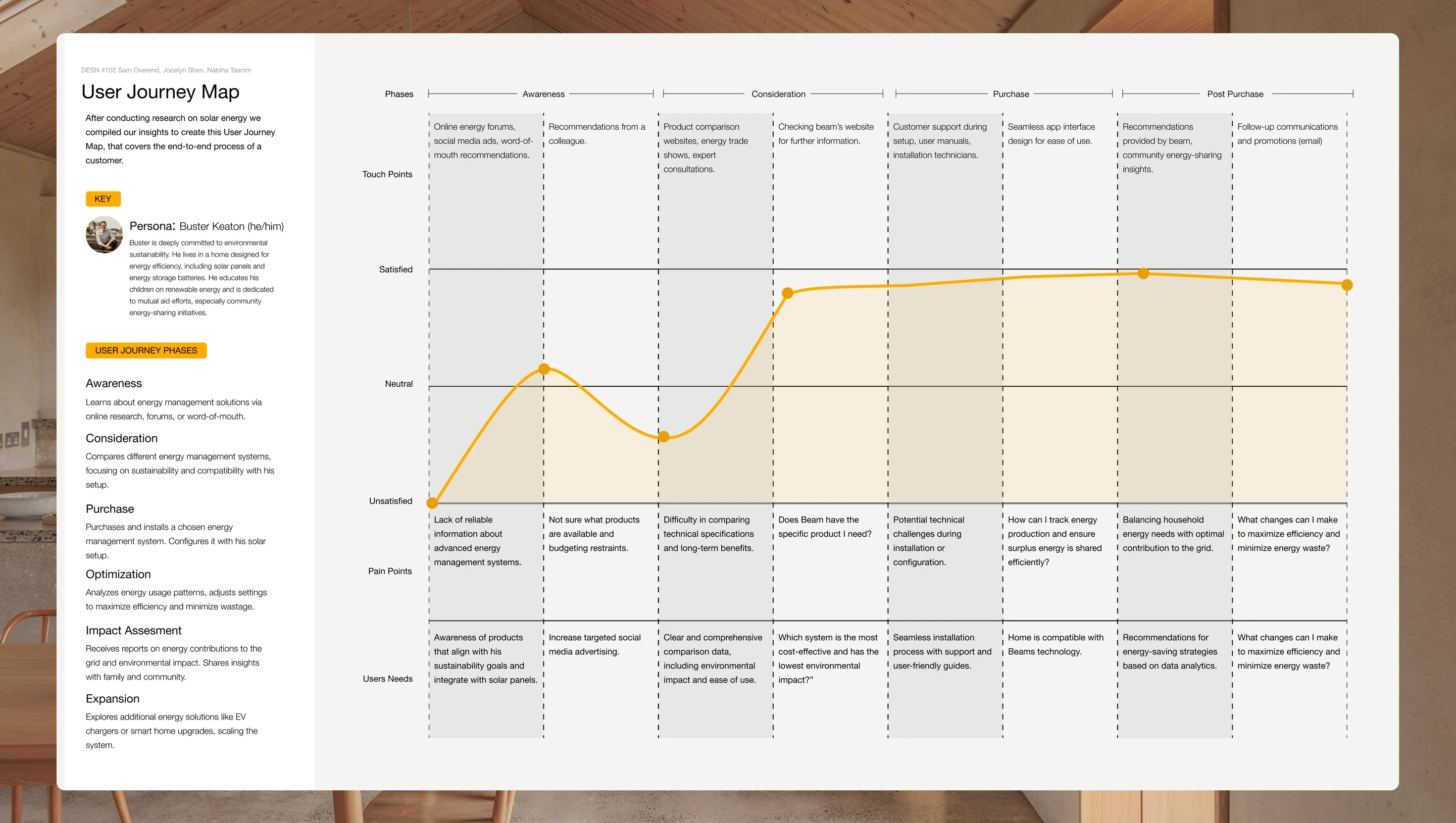
We then conceptualized a user journey map for Buster’s end-to-end experience of our product, from awareness to expansion.
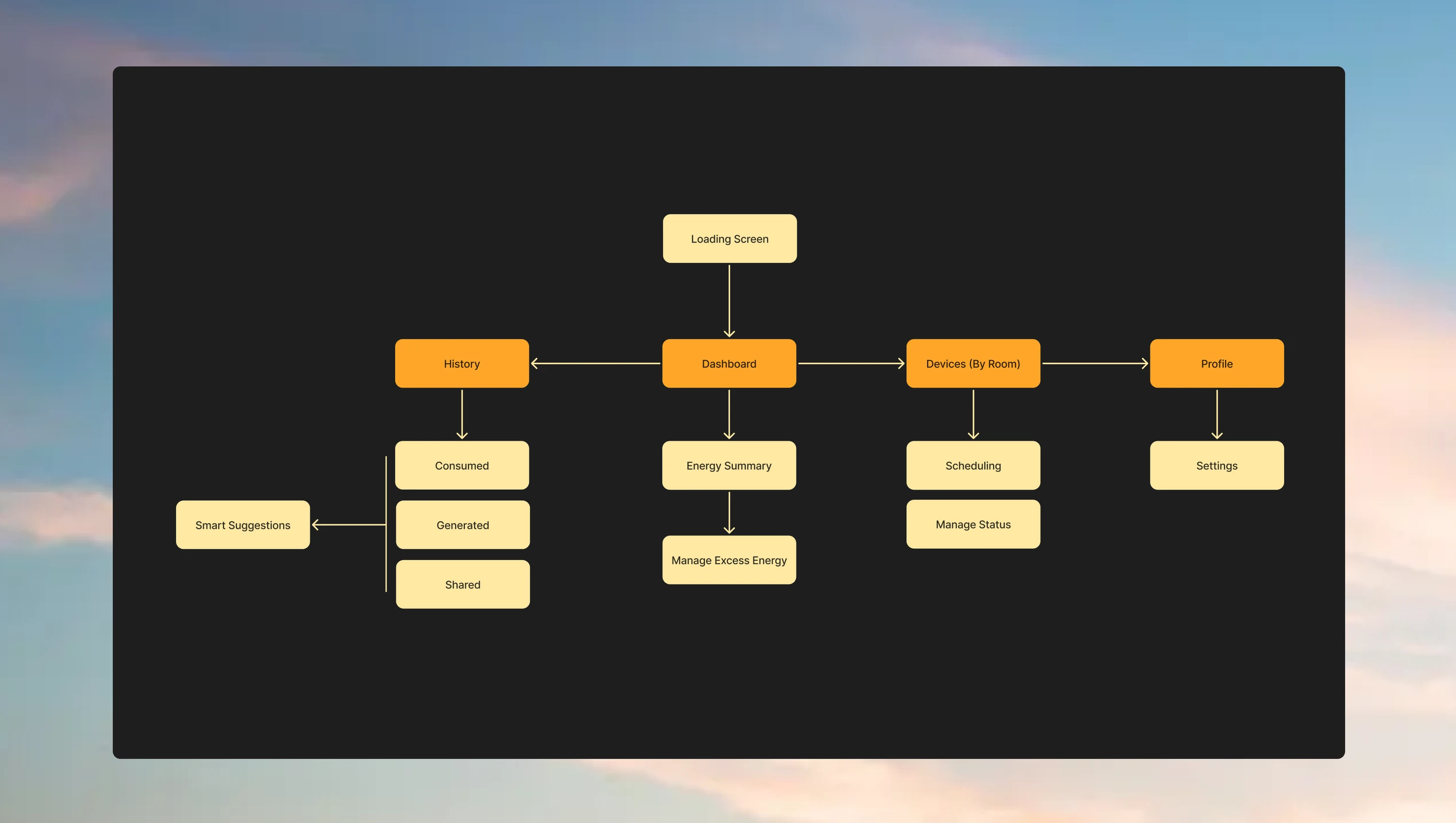
COMPETITIVE ANALYSIS
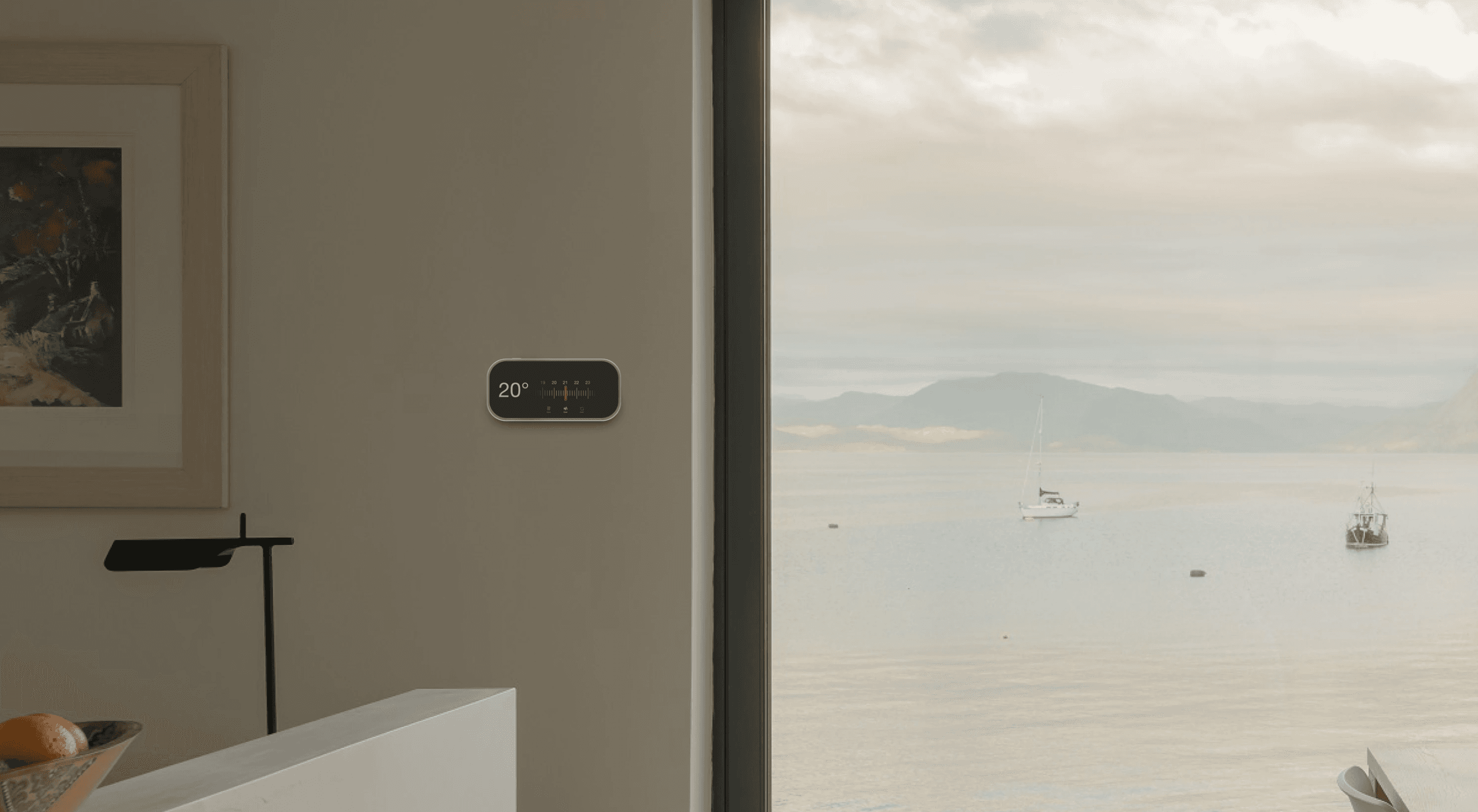
We researched existing smart home devices, considering how they could evolve in the next few years. Specific products we examined were the Ecobee Smart Thermostat, EcoFlow Smart Home Panel 2, and Google Nest. From this, we gathered the following effective features that would work well for our product:
• Adjust temperature and turn on vacation mode from your phone
• Manage temperature automatically through occupancy detection
• Learn and adapt to your routine
• Save excess energy in a portable power station
• Check real-time battery status and supply levels
ADDITIONAL FEATURES
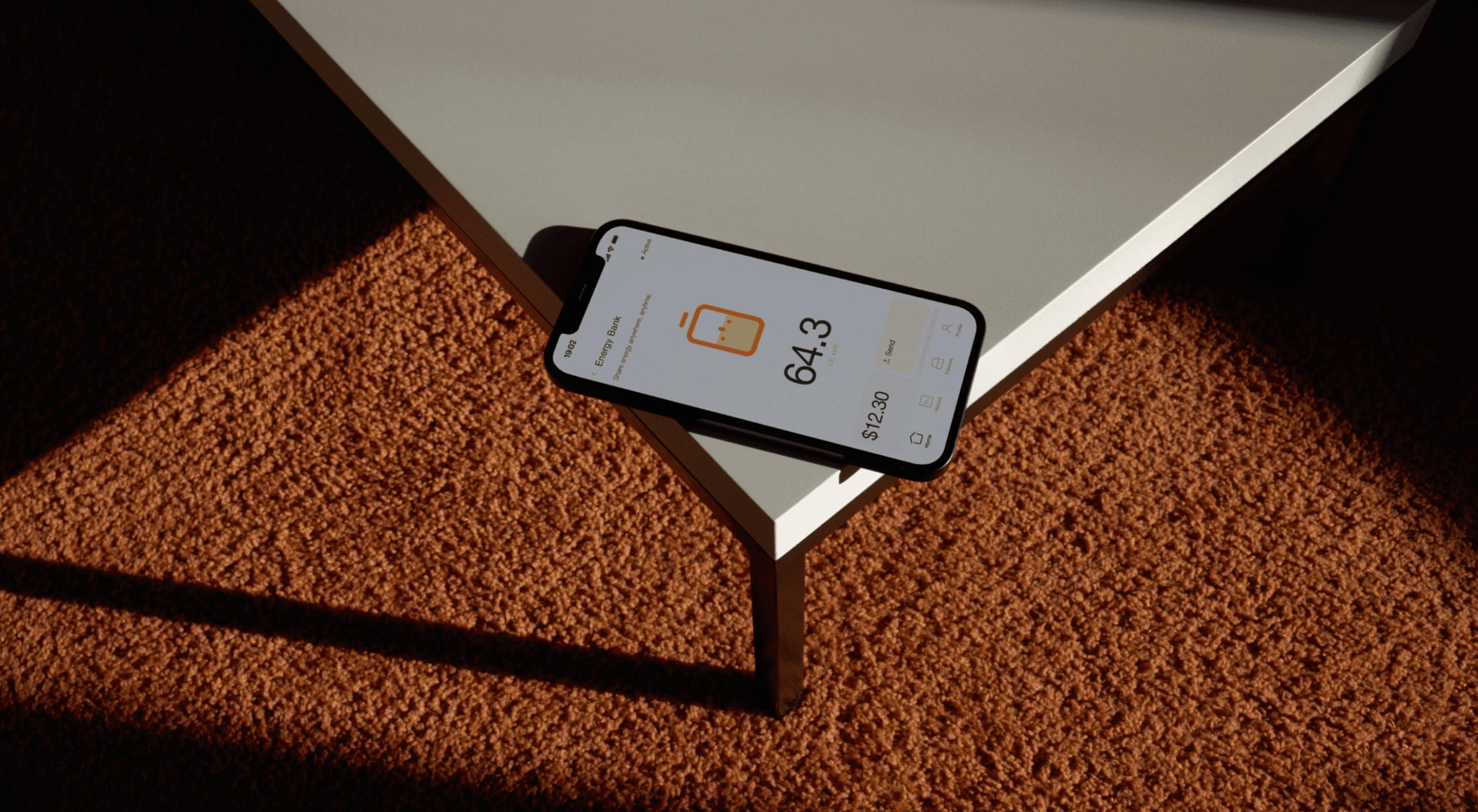
In addition to these features, we decided to include an Energy Bank, which would allow users to send and receive surplus energy, incentivizing more sustainable and community-driven energy habits.